







Cleanroom FFU
Hepa Supply Module(GSM)
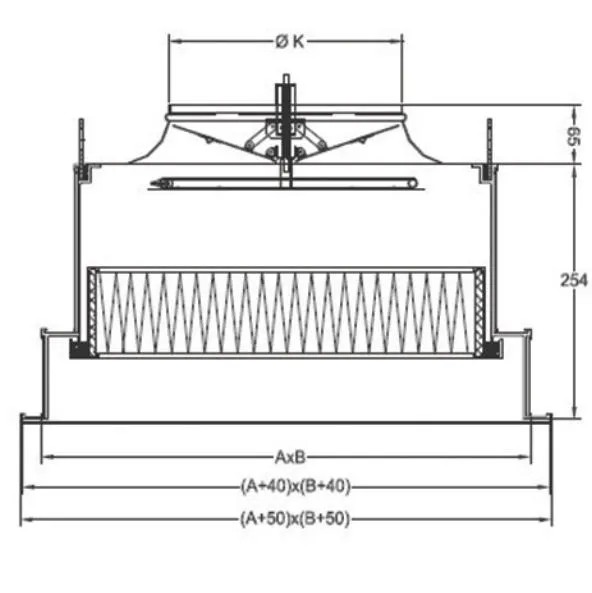
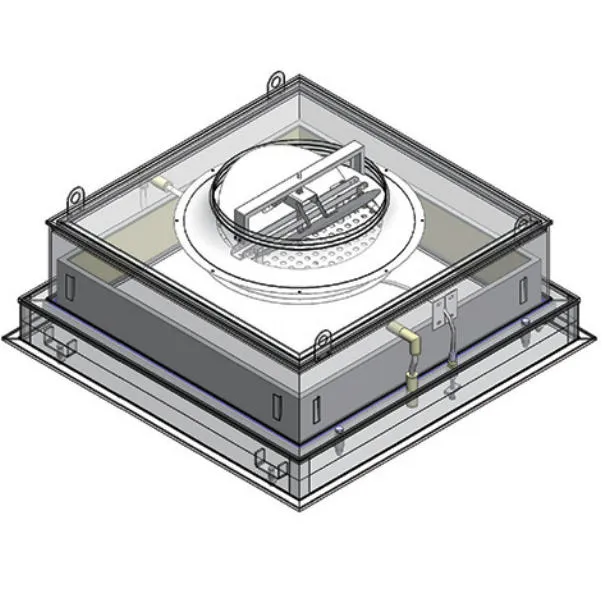
GSM housing made of 1.2mm cold-rolled steel or 2.5mm aluminum profile with unified coating. Downstream area fully welded for leak-free years of use. Camfil Leak-Lead™ design prevents structural leakage. Built-in GSF filter with special jelly liquid tank seal ensures long-term sealing.
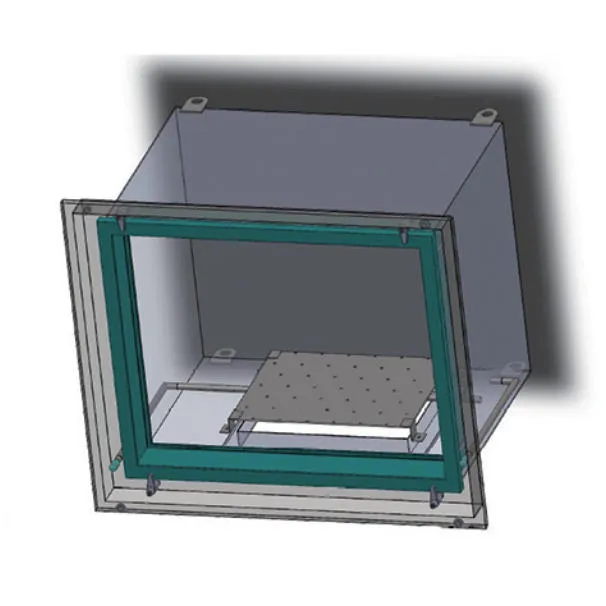
For engineering teams across Malaysia’s high-precision manufacturing and regulated industries, consistent airborne particulate control is non-negotiable. The Hepa Supply Module is a field-proven, modular ceiling-integrated air delivery unit designed to meet ISO Class 3–8 (Class 1–100,000) requirements without requiring custom structural integration. Unlike legacy FFU systems that rely on site-assembled grids or proprietary frames, this module uses standardized mounting interfaces compatible with both suspended grid ceilings and structural steel decks. It delivers uniform face velocity (±5% across the filter plane), low turbulence airflow, and repeatable performance across multi-bay cleanroom zones — critical for semiconductor photolithography bays, aseptic filling suites, and optical alignment labs where laminar stability directly impacts yield and repeatability.
Technical Specifications
The following table outlines key physical, aerodynamic, and compliance parameters verified per IEST-RP-CC001.7, EN 1822-5, and ISO 14644-3 test protocols. All units are pre-balanced at factory and shipped with certified airflow calibration reports.
| Parameter | Value | Notes |
|---|---|---|
| Filter Class | H13 or H14 (EN 1822) | Optionally configurable with ULPA (U15) for ISO Class 3–4 applications |
| Nominal Face Area | 610 × 610 mm / 1220 × 610 mm | Standard sizes; no field cutting required |
| Airflow Range | 300–1,200 m³/h per module | EC motor with 0–10 V analog or Modbus RTU control input |
| Face Velocity Uniformity | ≥90% of area within ±5% of mean | Measured per ISO 14644-3 Annex B |
| Noise Level (LpA) | ≤48 dB(A) at 1.5 m | At mid-range airflow (750 m³/h) |
| Frame Material | Anodized aluminum 6063-T5 | Non-shedding, corrosion-resistant, compliant with USP <797> surface criteria |
| Leak Integrity | Zero detectable leaks (DOP/PAO scan at 100% upstream concentration) | Tested per IEST-RP-CC034.3 |
Application-Specific Integration Guidance
In semiconductor and electronics fabs, the Hepa Supply Module replaces traditional FFU banks above litho tools and wafer inspection stations — minimizing recirculation eddies near sensitive optics while maintaining ≤0.1 µm particle removal efficiency at 0.45 m/s nominal velocity. For biomedical facilities, its sealed gasket design and smooth internal ducting eliminate microbial harborage points, supporting compliance with ASEPTIC processing environments under PIC/S PE 009-16 and MHRA Annex 1 (2022). In aerospace composite layup rooms, it integrates with humidity-controlled recirculation loops to suppress fiber dispersion without introducing static charge. For food & beverage packaging lines operating under Grade A (EU GMP Annex 1), modules are installed above filling heads using stainless steel support rails — enabling full CIP access beneath. Automotive battery module assembly areas benefit from its rapid-deploy grid interface: modules lock into standard Malaysia FFU ceiling grid profiles in under 90 seconds per unit, reducing commissioning downtime by up to 65% versus welded-frame alternatives.
Installation in Multi-Zone Semiconductor Cleanrooms
This configuration shows eight Hepa Supply Module units deployed across a 12 m × 18 m ISO Class 5 lithography sub-zone. Units are spaced at 1.2 m centers to achieve ≥0.45 m/s average unidirectional velocity with ≤10% cross-sectional variation. Integrated LED task lighting (3,500 K, CRI >90) is recessed into the module housing — eliminating shadow zones over reticle handlers. Power and control wiring run through standardized trunking channels aligned with the ceiling grid, avoiding penetrations into the cleanroom envelope. Compatibility with existing infrastructure means retrofit projects require zero modifications to the Malaysia cleanroom manufacturer’s ceiling panel system.
Validation Support for Regulated Life Science Facilities
Each shipment includes a validation-ready dossier: as-built drawings, filter certificate traceability (batch number, EN 1822 test report), motor calibration logs, and pre-commissioning airflow maps. During IQ/OQ, the module’s fixed diffuser geometry enables rapid smoke visualization — confirming laminar flow patterns within 15 minutes per zone. Its rigid frame eliminates gasket compression drift over time, ensuring long-term seal integrity required for MHRA and FDA process validation. For clients sourcing from a Malaysia cleanroom manufacturer, the module’s universal mounting flange simplifies integration with both aluminum and stainless steel ceiling support systems — reducing qualification effort across multiple facility sites.
Get a project-specific quote in 24 hours
Send your cleanroom classification, floor area and finish requirements. Our Malaysia-based engineering team replies with a stamped datasheet, fire certificate and pricing — 7×24 technical support by email, phone or WhatsApp.
Chat on WhatsAppWhy is rotating during the shower cycle important?
Standing still creates purification "dead spots" where airflow cannot reach areas like back, underarms, and knees. Active rotation (at least one full turn) with arm movements ensures complete surface exposure
