







Ceiling Grid System
Clean room FFU ceiling grid system
FFU ceiling grid system is a kind of mesh ceiling bearing system, integrated ceiling system, is capable of integrating ceiling, Fan filter unit, lighting system, broadcast system, smoke sensing system and fire protection system organically.
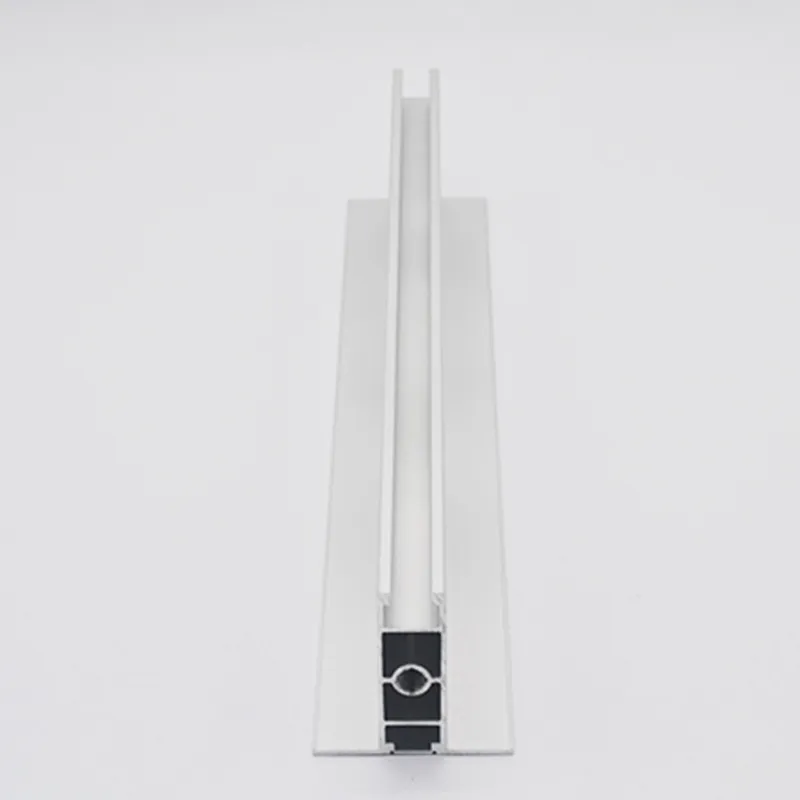
clean room ffu ceiling grid system: Precision-engineered for High-Performance Clean Environments
With over two decades of hands-on experience designing, specifying, and commissioning cleanrooms across semiconductor fabs, biopharma facilities, aerospace test labs, and precision manufacturing sites — I’ve seen how critical the Fan filter unit ceiling grid system is to long-term performance, operational flexibility, and regulatory compliance. This isn’t just a mounting framework; it’s the central nervous system of airborne particle control. Our clean room ffu ceiling grid system integrates seamlessly with Malaysia prefabricated cleanrooms and Malaysia modular cleanroom systems, delivering repeatable ISO Class 3–8 performance without on-site fabrication delays or dimensional compromise.
The core innovation lies in its modularity and serviceability. Unlike traditional gypsum or welded-grid ceilings, this system uses standardized Modular cleanroom ceiling panels — engineered for flatness tolerance ≤0.3 mm/m, non-shedding surfaces, and integrated gasket sealing — that lock precisely into a lightweight yet rigid aluminum T-grid structure. Each panel accepts standard 1200×600 mm or 1200×1200 mm FFUs, enabling scalable airflow coverage and future reconfiguration. Whether you’re upgrading an existing ffu clean room or building new, the FFU ceiling grid Design supports both laminar and turbulent flow layouts — with options for variable air volume (VAV) integration, pressure decay monitoring ports, and passive HEPA bypass zones where required.
This system is manufactured in a dedicated Fan filter unit ceiling grid Factory — not a general-purpose metal shop — where every extrusion, bracket, and suspension component undergoes dimensional QA, surface finish verification, and load testing. That consistency matters when your ffu for clean room deployment spans multiple clean zones with differing ISO classifications. And because real-world reliability hinges on installation integrity, our ffu installation protocol includes laser-levelled grid alignment, torque-controlled fastening, and post-installation airflow mapping — all documented per ISO 14644-3 Annex B.
Technical Specifications & Configurable Options
| Parameter | Standard Specification | Optional / Customizable |
|---|---|---|
| FFU ceiling grid Material | Anodized 6063-T5 aluminum (15 µm minimum) | Electropolished stainless steel (316L) for corrosive or high-humidity environments |
| Grid Module Size | 1200 × 600 mm (standard FFU footprint) | 1200 × 1200 mm, 900 × 900 mm, or custom spacing for non-standard FFU footprints |
| FFU T grid Depth & Load Capacity | 75 mm depth; rated for 15 kg/unit (including FFU + filter + maintenance access) | Reinforced 100 mm depth for heavy-duty FFUs (>20 kg) or dual-filter configurations |
| Ceiling Panel Compatibility | Compatible with all standard Modular cleanroom ceiling panels (PVC-coated steel, stainless, or FRP) | Integrated LED lighting cutouts, fire-rated mineral wool backing, acoustic damping layers |
| Airflow Uniformity (per ISO 14644-3) | ≥90% uniformity at 0.3 m below ceiling plane (tested with calibrated hot-wire anemometers) | Optimized for ≥95% uniformity with computational fluid dynamics (CFD)-verified FFU ceiling grid Design |
| Fire Rating | Class A / ASTM E84 (flame spread ≤25) | EN 13501-1 B-s1,d0 (for EU/ASEAN-regulated biomedical or data center projects) |
| ffu price Transparency | Quoted per grid module (includes suspension hardware, leveling brackets, and seal kits) | Turnkey package pricing available: grid + panels + FFUs + commissioning report |
Field-Proven Integration Across Critical Industries
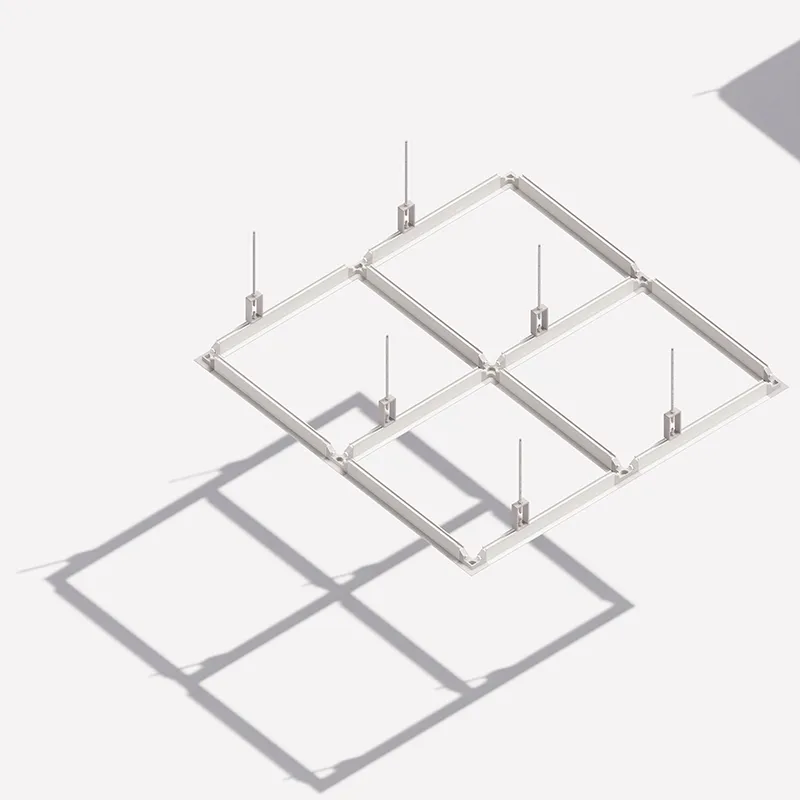
In semiconductor and electronics manufacturing, vibration sensitivity and particle shedding are non-negotiable constraints. Our FFU ceiling grid system eliminates resonance points through decoupled suspension and isolates FFU motor noise via elastomeric mounts — verified in 300 mm wafer fab tool bays across Penang and Kulim. For biomedical and life science clients, the system supports rapid decontamination cycles: smooth, crevice-free joints prevent biofilm accumulation, and panels lift cleanly for full HEPA replacement — critical during sterile fill-finish line validation.
Aerospace and precision optics teams rely on thermal stability and low outgassing. The aluminum FFU ceiling grid maintains dimensional stability from 15–30°C ambient swings, while optional electropolished finishes meet NASA-STD-6002 outgassing thresholds. In food & beverage production, where hygiene audits demand traceable materials, each grid batch carries mill-certified material logs and RoHS/REACH documentation — aligning with MAF’s GMP requirements.
For automotive electronics and new energy battery cell assembly, the Fan filter unit ceiling grid enables zoned classification: Class 5 at electrode coating stations, transitioning to Class 7 in buffer zones — all on one continuous ceiling plane. And in data centers with cleanroom-grade server rooms (e.g., AI training clusters), the FFU ceiling system integrates with BMS for real-time differential pressure alarms and fan speed modulation — reducing energy use by up to 22% versus fixed-speed FFUs.
Whether you’re evaluating for a new Malaysia modular cleanroom systems rollout or retrofitting legacy infrastructure, this clean room ffu ceiling grid system delivers measurable ROI: faster commissioning (average 40% reduction vs. welded grids), lower lifetime maintenance (no weld corrosion, no gasket degradation), and full compatibility with third-party FFUs — including leading brands like Camfil,AAF, and Kirsch. It’s not about lowest ffu price. It’s about lowest total cost of ownership, validated in the field — not the datasheet.
Get a project-specific quote in 24 hours
Send your cleanroom classification, floor area and finish requirements. Our Malaysia-based engineering team replies with a stamped datasheet, fire certificate and pricing — 7×24 technical support by email, phone or WhatsApp.
Chat on WhatsApp