







Ceiling Grid System
Cleanroom ceiling grid
Thread aluminium ceilings is one type lightweight ceiling mesh system with strong load-bearing capacity, small size and light weight, aluminum alloy threaded suspension ceiling grid system.
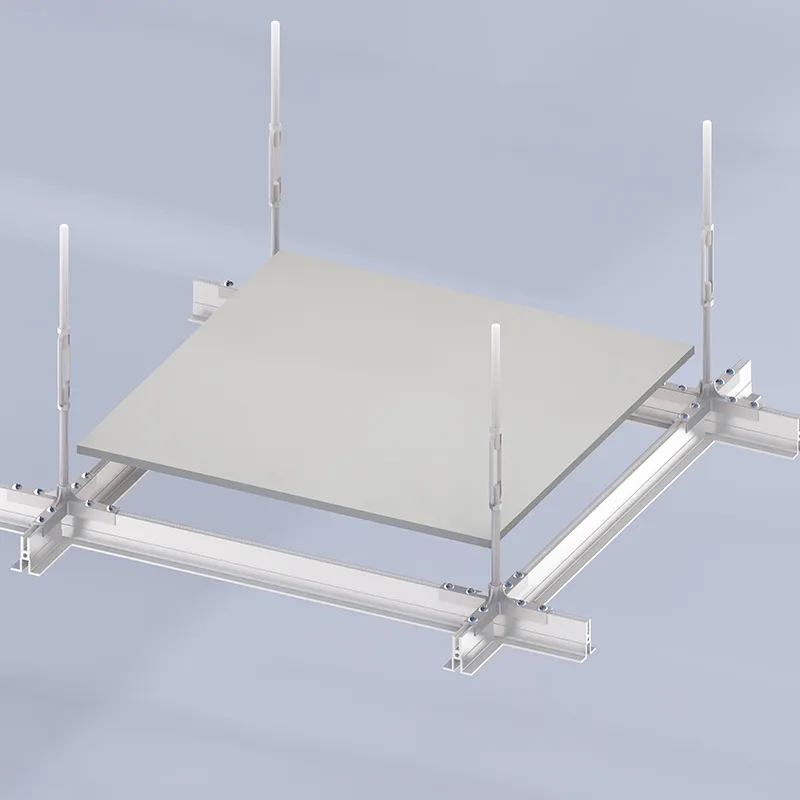
A precision-engineered clean room ceiling grid serves as the structural backbone for modular cleanroom environments across high-regulation industries. Designed for rapid installation, long-term dimensional stability, and seamless integration with filtration, lighting, and monitoring systems, this grid system anchors clean room ceiling panel systems, FFUs, sensors, and service drops without compromising airflow integrity or particulate containment. Unlike conventional suspended ceilings, it maintains strict flatness tolerance (±0.3 mm/m), resists vibration-induced micro-leakage, and supports load distribution for heavy-duty terminal units — critical where ISO Class 3–8 conditions are non-negotiable. Its compatibility spans both hardwall and softwall cleanroom architectures, making it equally suitable for Malaysia prefabricated cleanrooms and site-assembled enclosures in controlled manufacturing zones.
Technical Specifications
The following table outlines key physical and performance attributes verified per ISO 14644-1 alignment protocols and ASTM E2500-13 validation guidelines:
| Parameter | Specification |
|---|---|
| Material | Anodized 6063-T5 aluminum alloy (minimum 15 µm anodizing layer) |
| Grid Profile | Standard T-bar cross-section; optional low-profile (12 mm height) variant for tight headroom |
| Modular Dimensions | 600 × 600 mm, 600 × 1200 mm, and 1200 × 1200 mm nominal module spacing |
| Load Capacity | ≥ 15 kg/m² uniform load; ≥ 35 kg point load at suspension points |
| Flatness Tolerance | ≤ 0.3 mm deviation per linear meter (measured under static ambient conditions) |
| Fire Rating | Class A (ASTM E84, flame spread ≤ 25, smoke developed ≤ 45) |
| Corrosion Resistance | Passes 1,000-hour neutral salt spray (ASTM B117) without red rust or coating delamination |
| Surface Finish | Matte anodized finish (Ra ≤ 0.8 µm); optional electropolished option for pharmaceutical-grade applications |
Real-World Integration Across Sectors
In semiconductor front-end fabs, the clean room ceiling grid interfaces directly with wafer track tools and mini-environments — its rigidity prevents sag-induced misalignment of photolithography optics and ensures repeatable FFU-to-filter gasket compression. For biomedical labs requiring biosafety level 2+ containment, the grid integrates with negative-pressure ductwork and HEPA/ULPA plenums while allowing unobstructed access to laboratory cabinet service penetrations. In aerospace composite layup bays, thermal expansion compensation joints within the grid absorb diurnal temperature shifts without distorting laminar flow patterns over large tooling surfaces. Food & beverage filling suites rely on its smooth, crevice-free profile to eliminate microbial harborage — especially where chemical lab furniture is installed adjacent to open product transfer zones. Automotive battery cell assembly lines use the grid to suspend ionized air nozzles and real-time particle counters above conveyor paths — all while maintaining full compliance with IATF 16949 environmental control clauses. The system’s modularity also enables phased upgrades: adding a new clean room ceiling panel or retrofitting UV-C disinfection modules without shutting down adjacent production cells.
Installation in High-Ceiling Manufacturing Halls
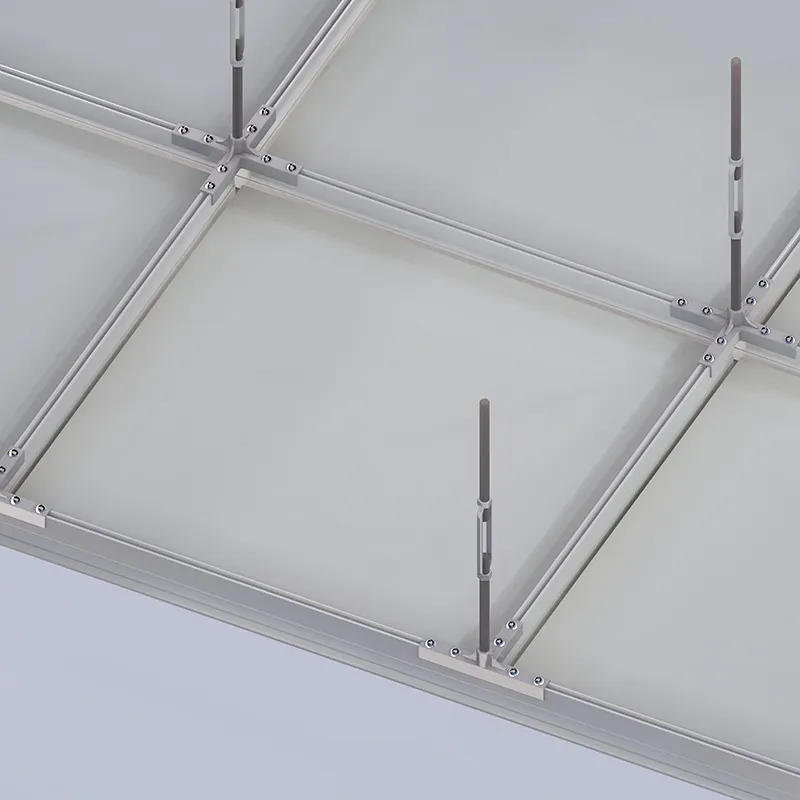
Large-volume spaces — such as data center server vaults or新能源 battery module assembly floors — often feature ceiling heights exceeding 6 meters. In these settings, the clean room ceiling grid is mounted via adjustable stainless steel suspension rods anchored to structural steel or reinforced concrete slabs. Pre-calibrated leveling brackets allow ±15 mm vertical fine-tuning during commissioning, ensuring uniform plane alignment across 100+ m² zones. This eliminates airflow turbulence caused by uneven clean room ceiling suspension and supports consistent velocity profiles required for ISO Class 7 environments in HVAC-intensive facilities. The grid also accommodates cable trays, fire suppression nozzles, and seismic bracing without altering primary support geometry — a necessity in earthquake-prone regions and high-vibration automotive test bays.
Maintenance & Long-Term Performance
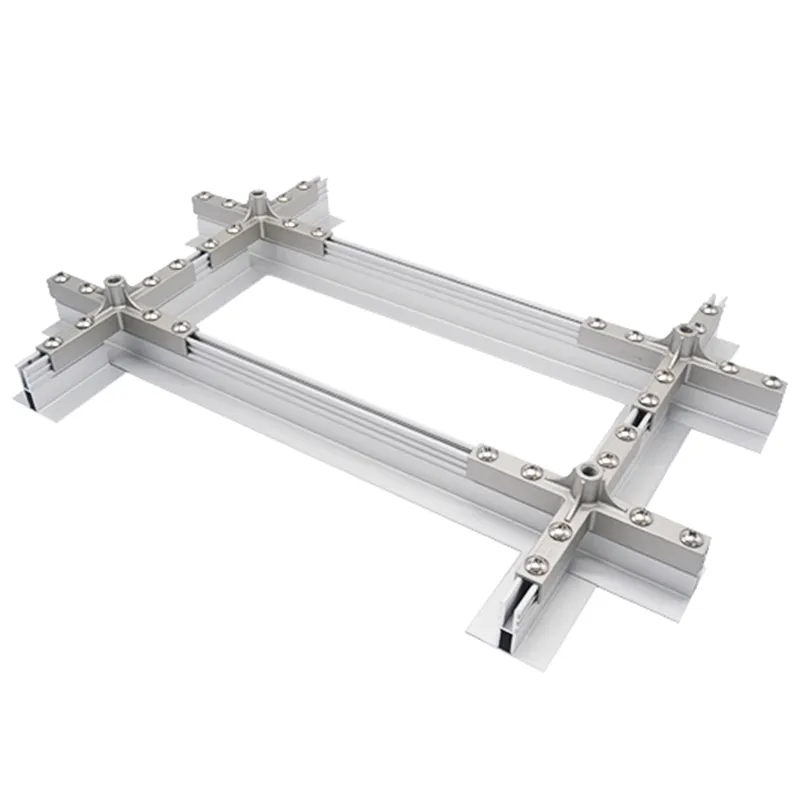
Unlike painted steel grids prone to flaking or polymer-based alternatives susceptible to UV degradation, the anodized aluminum clean room ceiling grid system requires only periodic wipe-down with isopropyl alcohol and lint-free cloths. Its non-porous surface resists biofilm formation and does not shed particles during routine cleaning cycles — validated per USP <788> and EU GMP Annex 1 sampling protocols. Over 20 years of field data from installations in humid tropical climates (including Malaysia) confirm zero incidence of galvanic corrosion when paired with standard clean room ceiling panel systems and cleanroom partition interfaces. Replacement of individual T-bars or corner connectors takes under 12 minutes per module using standard hex drivers — minimizing downtime for cleanroom supplier service teams. For facilities managing multiple cleanroom zones, standardized grid dimensions simplify spare-part logistics and reduce inventory complexity. When paired with certified cleanroom manufacturer validation packages, the system contributes directly to audit-ready documentation for FDA, MDA, or SIRIM compliance reviews.
Get a project-specific quote in 24 hours
Send your cleanroom classification, floor area and finish requirements. Our Malaysia-based engineering team replies with a stamped datasheet, fire certificate and pricing — 7×24 technical support by email, phone or WhatsApp.
Chat on WhatsApp