







Cleanroom Other Products
Clean Panel Clean Booth / Hardwall Modular Clean Booth
The Clean Panel Clean Booth is a rigid, high-integrity contamination control enclosure constructed from industrial-grade cleanroom sandwich panels. Unlike softwall (PVC) or semi-rigid (acrylic) booths, this hardwall solution provides superior sealing, thermal insulation, and structural durability –
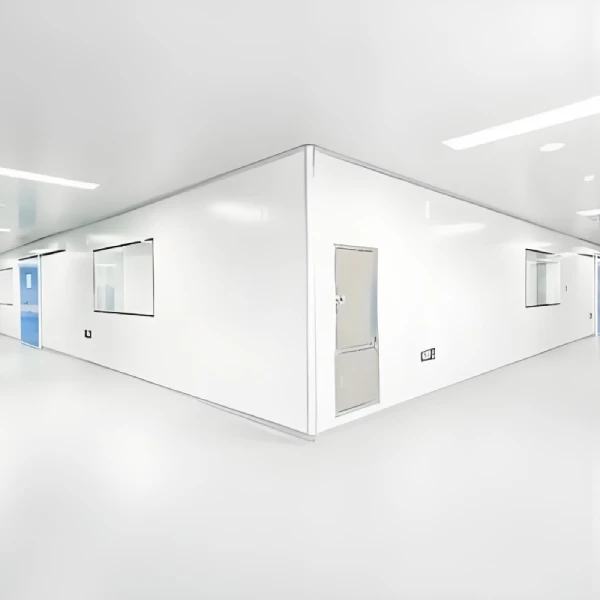
Designed for mission-critical environments across high-precision industries, the Clean Panel Clean Booth and Hardwall Modular Clean Booth deliver consistent ISO Class 3–8 performance with structural integrity, rapid deployment, and long-term operational reliability. Unlike softwall enclosures or temporary laminar flow solutions, this system integrates rigid aluminum-framed wall panels, seamless welded stainless steel or anodized aluminum ceilings/floors, and integrated HEPA/ULPA filtration — all engineered to maintain stable pressure differentials, minimize particle generation, and support repeatable validation protocols. It serves as a dedicated clean room booth within existing facilities — eliminating the need for full cleanroom build-outs while meeting stringent regulatory expectations in regulated manufacturing.
Technical Specifications & Configurable Parameters
The following table outlines standard configurations aligned with ASEAN climatic conditions, GMP Annex 1, ISO 14644-1, and SEMI S2/S8 requirements. All units are pre-engineered for plug-and-play integration with facility HVAC, electrical, and exhaust systems. Panel thickness, filter class, lighting type (e.g., 5000K LED with >90 CRI), and access options (sliding, hinged, or interlocked doors) are customizable per application scope.
| Parameter | Standard Range | Notes |
|---|---|---|
| Cleanliness Class | ISO 3 (Class 1) to ISO 8 (Class 100,000) | Validated via particle counters per ISO 21501-4; ULPA optional for ISO 3–4 |
| Wall Panel Construction | 0.8–1.2 mm anodized aluminum or 304 stainless steel skin, 50–100 mm rigid polyurethane core | Non-shedding, non-porous, Class A surface finish (Ra ≤ 0.8 µm) |
| Airflow Pattern | Unidirectional (vertical/horizontal) or non-unidirectional | Velocity: 0.3–0.45 m/s (vertical); 0.2–0.3 m/s (horizontal) |
| Filtration | HEPA H13 (99.95% @ 0.3 µm) or ULPA U15 (99.9995% @ 0.12 µm) | Filter frame gasketed; leak-tested per IEST-RP-CC034.3 |
| Pressure Differential | +15 to +30 Pa (vs ambient) | Adjustable via variable-speed fan module with PID control |
| Power Supply | 220–240 V AC, 50 Hz, single/three-phase | Includes surge protection and emergency stop circuit |
| Footprint Options | 1.2 × 1.2 m to 4.0 × 3.0 m (custom L-shaped or multi-bay layouts supported) | Modular design allows reconfiguration without structural demolition |
Real-World Application Across High-Integrity Sectors
In semiconductor and electronics manufacturing, the Clean Panel Clean Booth isolates wafer probing, die bonding, and final test stations — preventing nanoscale contamination from facility air or personnel movement. Its rigid walls eliminate vibration transmission critical for photolithography alignment tools. For biomedical and life science labs, it functions as a controlled environment for cell culture passaging, sterile filling of diagnostics kits, and QC sampling — fully compatible with laminar flow hood manufacturers integration where local airflow enhancement is required. In aerospace component assembly, it safeguards optical sensor calibration and micro-gear meshing under ISO 5 conditions — maintaining thermal stability and particulate control during 8-hour shifts. Precision optics firms use it for lens coating chamber loading/unloading, while food & beverage producers deploy it for microbial swab station containment and allergen-free packaging R&D. Automotive Tier 1 suppliers rely on its modularity to protect ADAS camera calibration zones, and data center operators install it adjacent to server rack testing bays to prevent airborne metal particulates from affecting thermal interface material curing. Renewable energy firms apply it during solar cell metallization inspection and battery electrode coating QA — where humidity and sodium ion control are non-negotiable.
Integration Flexibility in Existing Facilities
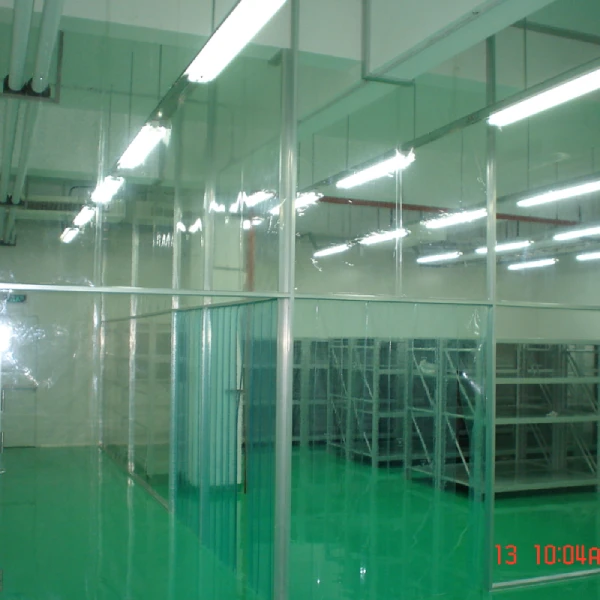
No structural modification is needed: floor-mounted anchors secure the unit directly to epoxy-coated concrete or raised access floors. Ceiling height clearance starts at 2.4 m; ductless recirculation models reduce load on central HVAC. Integrated sensors monitor differential pressure, temperature, humidity, and filter delta-P in real time — outputs feed into existing SCADA or MES platforms via Modbus RTU or BACnet MS/TP. Lighting, power outlets, gas ports (N₂, compressed air), and static-dissipative work surfaces are pre-installed and certified to IEC 61340-5-1. Validation documentation (DQ/IQ/OQ) is provided per client protocol, including as-built drawings, filter scan reports, and airflow visualization videos. The Hardwall Modular Clean Booth supports phased commissioning — one bay operational while adjacent modules are configured — minimizing production downtime. This makes it especially suitable for Malaysian engineering teams managing brownfield upgrades across semiconductor fabs, biologics fill-finish suites, and EV battery gigafactories.
Long-Term Operational Performance
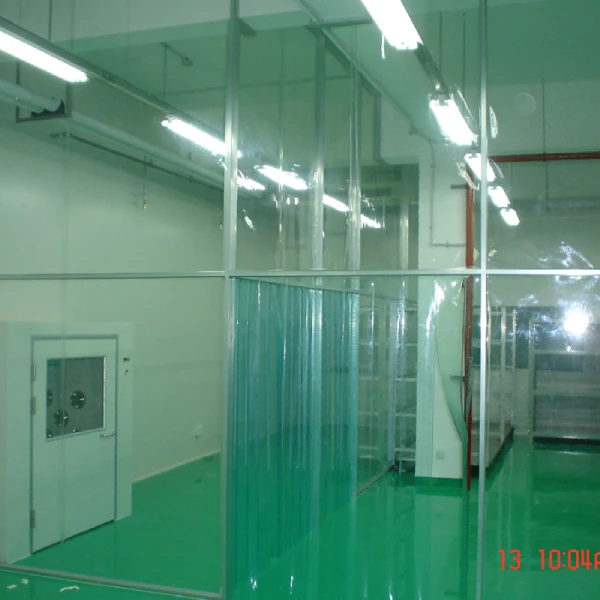
Unlike field-assembled cleanrooms subject to thermal expansion gaps or sealant degradation, the Hardwall Modular Clean Booth uses precision-machined tongue-and-groove panel interfaces with EPDM compression gaskets rated for 10+ years of continuous operation at 25–35°C ambient. Wall panels resist corrosion from IPA wipes, hydrogen peroxide vapor (HPV) decontamination cycles, and routine acid/base cleaning. Fan modules feature brushless DC motors with 50,000-hour service life and noise levels below 55 dB(A) at 1 m. Filter replacement is tool-free and completed in under 20 minutes per bank. Maintenance intervals follow ISO 14644-2:2015 — typically every 6 months for HEPA, annually for ULPA — with no need for external scaffolding. The clean room booth remains compliant across Malaysia’s high-humidity coastal sites and inland industrial zones, thanks to condensation-resistant ceiling plenums and anti-mold treated insulation cores. As a result, lifecycle cost per square meter is up to 38% lower than conventional stick-built alternatives over a 10-year horizon — verified by third-party TCO analysis for clients in Penang, Kulim, and Johor Bahru.
Get a project-specific quote in 24 hours
Send your cleanroom classification, floor area and finish requirements. Our Malaysia-based engineering team replies with a stamped datasheet, fire certificate and pricing — 7×24 technical support by email, phone or WhatsApp.
Chat on WhatsAppWhere should air showers be installed in a cleanroom?
Install between changing rooms and clean areas, or between ISO 8/ISO 7 classified areas and unclean areas. Personnel pass through after changing into cleanroom clothing but before entering the controlled environment
What is involved in the construction of a modular cleanroom?
To assemble laboratory spaces efficiently, modular components are preferred. An assembled cleanroom utilizes prefabricated sections to reduce on-site construction time. The underlying aluminum profile system provides the necessary framework for mounting panels and doors, ensuring precision alignment and structural rigidity throughout the facility.
What are the key considerations for air shower design?
Selecting the right air shower requires careful planning. Proper air shower design ensures effective personnel decontamination before entering controlled environments. Specifications depend on room size. Consulting an experienced air shower manufacturer helps determine optimal placement. Compliance with standards is essential. Regular maintenance schedules must be established to sustain performance over time.
What defines quality in clean room door systems?
Sealing integrity is vital. air tight sliding clean room doors prevent pollutants from entering. Each air tight sliding cleanroom door must meet pressure ratings. Reputable air tight sliding cleanroom door manufacturers provide leakage certification. Automatic mechanisms reduce human contact risks. Material selection prioritizes durability and ease of cleaning to meet hygiene protocols. Installation requires precise alignment.
