







Cleanroom Equipment
Clean laminar flow hood
Purified laminar flow cover is an air purification unit that can provide a locally clean environment,It can be installed flexibly above the process points requiring high cleanliness.
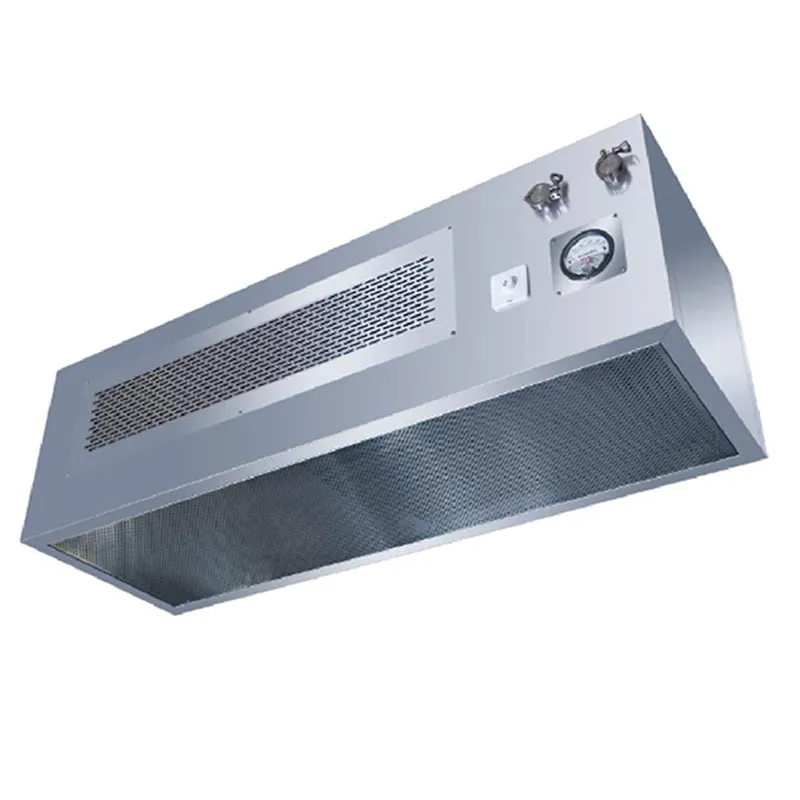
Designed for mission-critical environments where particulate control, operator safety, and process integrity are non-negotiable, the Clean laminar flow hood delivers ISO Class 5 (Class 100) airflow performance across a broad spectrum of engineering and life science applications. Unlike generic enclosures, this unit integrates validated Laminar Flow Hood aerodynamics with robust construction, consistent velocity profiling, and low-turbulence exhaust management—ensuring uniform, unidirectional Laminar flow air across the entire work surface. It meets core requirements for semiconductor photolithography staging, sterile sample handling in Hospital sample room setups, precision optical alignment, and aseptic packaging in food-grade production lines. The design prioritises repeatability over aesthetics: no hidden seams, minimal recirculation zones, and a fully accessible plenum for routine verification and maintenance. Compatibility with standard cleanroom utilities—including HEPA/ULPA integration points, static-dissipative surfaces, and optional UV-C decontamination—makes it adaptable without compromising validation integrity.
Technical Specifications
The following table outlines key performance and physical parameters verified per IEST-RP-CC002.3 and ISO 14644-3 protocols. All airflow velocities are measured at 75 mm above the work surface using calibrated hot-wire anemometry; filter efficiency is certified to EN 1822-1:2019 (H14 grade).
| Parameter | Value |
|---|---|
| Work Area Dimensions (W × D × H) | 1200 × 600 × 600 mm |
| Airflow Velocity Range | 0.3–0.5 m/s (adjustable, ±5% uniformity) |
| Filter Type & Efficiency | H14 ULPA (≥99.9995% @ 0.1 µm) |
| Construction Material | 304 stainless steel (work surface), anodised aluminium frame, tempered glass sash |
| Power Supply | 230 V AC, 50 Hz, 1.2 kW (fan + lighting) |
| Lighting | LED, ≥500 lux at work surface, shadow-free distribution |
| Electrical Safety | IEC 61000-6-3 / IEC 61000-6-4 compliant |
| Optional Features | UV-C lamp (254 nm), touchless sash control, data logging interface, static-dissipative work surface |
Application-Specific Integration
In semiconductor and electronics manufacturing, the unit serves as a localised Class 5 buffer for wafer probing, die bonding, and pre-assembly inspection—reducing dependency on full-room classification while maintaining nanometre-level contamination control. For biomedical labs and Hospital sample room configurations, its vertical downflow architecture minimises cross-contamination between specimens and supports CLSI-compliant handling of clinical isolates. In aerospace component assembly, the absence of horizontal airflow prevents particle re-entrainment during sensor calibration or fibre-optic connector polishing. Precision instrument manufacturers rely on its stable thermal profile and vibration-damped base for interferometer setup and laser collimation. Food and beverage producers use it for environmental monitoring media preparation and pathogen culture isolation—fully compliant with BRCGS and SQF hygiene clauses. Automotive Tier-1 suppliers deploy multiple units in parallel for EV battery cell electrode inspection and MEMS sensor final test. Data centre hardware validation labs apply it during bare-board burn-in to prevent dust-induced thermal throttling. Its compact footprint and plug-and-play electrical interface enable rapid deployment without structural modification.
Maintenance & Operational Discipline
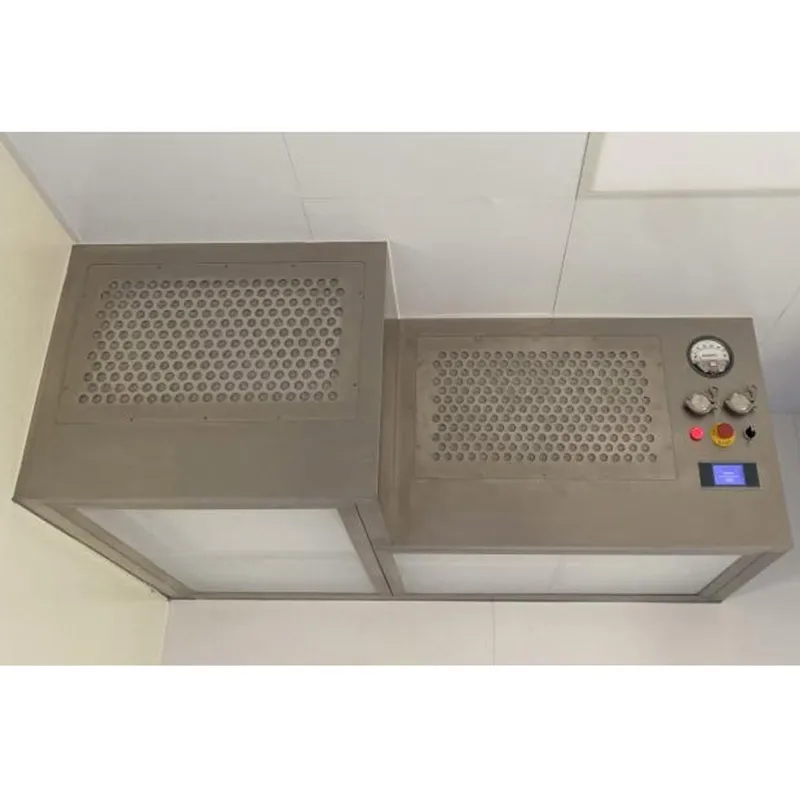
Sustained performance depends on disciplined operational practice—not just hardware quality. A validated how to clean a laminar flow hood protocol must include daily wipe-downs with 70% isopropyl alcohol (IPA), weekly HEPA pre-filter replacement, and biannual ULPA integrity testing via photometer scan. Operators must avoid abrupt sash movements, maintain minimum 15 cm clearance from the front grille, and allow 10 minutes of pre-operation purge before critical tasks. The laminar flow hood design incorporates removable side panels and a tool-less fan access panel to simplify these routines. For laboratories managing diverse workflows, pairing this unit with a horizontal laminar air flow hood provides complementary flexibility: vertical flow for personnel-facing procedures, horizontal for product-outward processes like sterile filling. The Laminar Flow Cabinet variant—with sealed base and integrated glove ports—is recommended for BSL-2 containment extension where aerosol generation is anticipated.
Global Supply & Technical Alignment
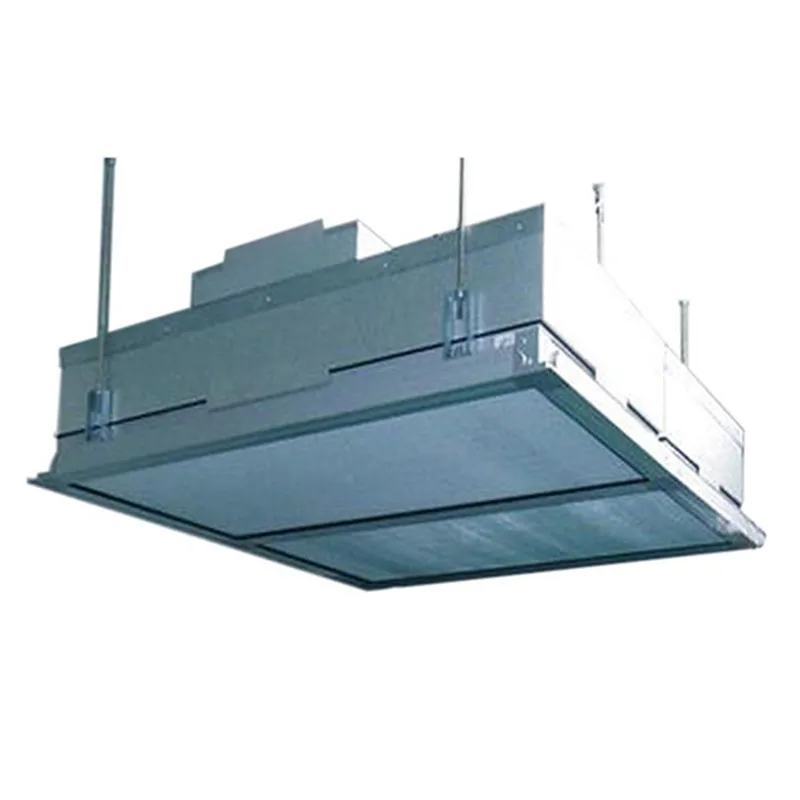
Supply chain resilience and technical continuity are built into delivery logistics. Units ship fully assembled and pre-tested, with comprehensive documentation including factory-balanced airflow reports, filter certification dossiers, and installation checklists aligned with Malaysian DOE, MIMOS, and MOH facility guidelines. Integration support covers utility interface mapping (compressed air, vacuum, data ports), cleanroom wall cut-in coordination, and commissioning verification under real ambient conditions. For procurement teams evaluating long-term partners, laminar flow hood manufacturers offering traceable serial-number-based lifecycle records—and not just one-time delivery—deliver measurable ROI across equipment depreciation cycles. This unit supports seamless transition from ISO Class 7 to Class 5 zoning, enabling phased cleanroom upgrades without full rebuilds. Its modularity also allows retrofitting into existing Laminar Flow Hood infrastructure where airflow decay or sash wear has compromised baseline performance.
Get a project-specific quote in 24 hours
Send your cleanroom classification, floor area and finish requirements. Our Malaysia-based engineering team replies with a stamped datasheet, fire certificate and pricing — 7×24 technical support by email, phone or WhatsApp.
Chat on WhatsApp