







Cleanroom Equipment
Atomized glass film
Electrified atomized glass is a brand-new technological product that can produce an atomizing effect on the glass surface by controlling electric current to protect privacy....
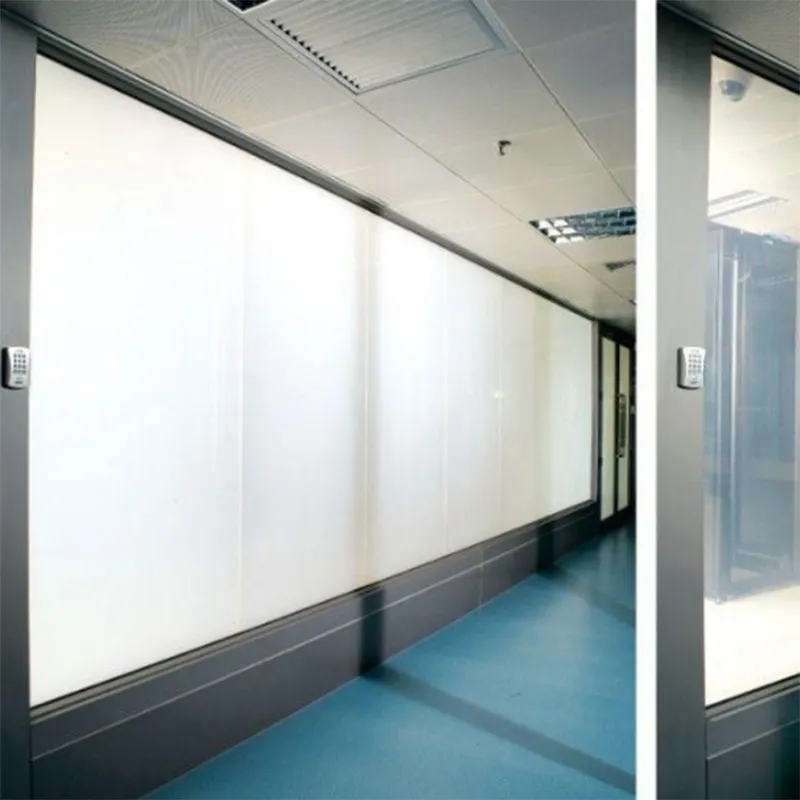
Atomized glass film is a dynamic electrochromic interlayer technology integrated into laminated glass assemblies for cleanroom environments. Unlike static tinted or frosted alternatives, it enables on-demand, reversible switching between transparent and opaque states via low-voltage DC current—offering real-time visual privacy without compromising structural integrity, light transmission, or ISO-class compliance. In semiconductor fabrication, biopharma aseptic suites, and precision optical labs, where personnel movement, material handling, and process observation must coexist under strict particulate control, this film eliminates the need for mechanical blinds, curtains, or secondary partitions that trap contaminants or hinder cleaning protocols. Its seamless integration into clean room partition panels and Cleanroom weighing cover systems supports modular, validated cleanroom builds—especially where full-glass visibility must align with GMP, FDA 21 CFR Part 11, or IEST-CC1004 requirements.
Deployed across Malaysia prefabricated cleanrooms, it serves engineering teams specifying clean room full glass partition wall solutions that balance operational transparency with contamination control. As a non-intrusive upgrade to existing clean room glass panel installations, it avoids retrofit downtime while meeting stringent demands for Weighing Protection Hood integrity in analytical labs and formulation areas. It does not replace clean room garments or air-handling systems—but enhances spatial logic within classified zones by enabling context-aware visual zoning: e.g., toggling opacity during sensitive weighing steps inside a Clean Room Glass Doors-accessed buffer zone, or maintaining clarity during equipment validation in aerospace avionics assembly.
Technical Specifications
| Parameter | Value | Notes |
|---|---|---|
| Switching voltage | DC 36–48 V (UL/IEC 62368-1 compliant) | Low-energy operation; compatible with standard cleanroom power distribution |
| Switching time (transparent ↔ opaque) | < 1.2 seconds (full area, 25°C) | Independent of panel size; verified per ASTM D1003 for haze & transmittance |
| Visible light transmittance (ON/OFF) | 72% / < 2.5% | Measured at 550 nm; meets ISO 14644-1 Class 5 ambient lighting guidelines |
| Surface hardness (glass side) | ≥ 7H (ASTM D3363) | Compatible with IPA-based disinfectants and non-abrasive wipe protocols |
| Operating temperature range | −10°C to +65°C | Validated for continuous use in HVAC-stabilized cleanrooms (18–24°C typical) |
| Lifespan (switch cycles) | > 1 million cycles | Based on accelerated aging at 85% RH, 40°C; no degradation in haze or response latency |
| Fire rating (laminated assembly) | BS 476-22:1987 Class 0 / EN 13501-1 B-s1,d0 | When bonded to 6 mm tempered glass with PVB interlayer |
Field Integration Across Critical Industries
In semiconductor front-end fabs, Atomized glass film is embedded into Clean room glass door frames and observation walls separating lithography bays from tool maintenance corridors—enabling engineers to monitor wafer alignment in real time, then instantly obscure the view during chamber opening to prevent airborne particle ingress from adjacent zones. For biopharma fill-finish lines, it upgrades clean room full glass partition walls between Grade A isolators and Grade C support areas, eliminating shadow zones where manual interventions could compromise sterility. In aerospace composite layup rooms, it integrates into overhead viewing panels above autoclave loading zones, allowing QA supervisors to verify ply orientation without entering the ISO Class 7 environment—reducing gowning frequency and airflow disruption. Automotive battery module assembly lines apply it to clean room glass partition wall dividers between electrode coating and cell stacking stations, supporting visual workflow tracking while containing nanoscale graphite dust. Within food-grade packaging cleanrooms, it replaces acrylic shields on inspection windows—resisting ethanol-based sanitizers better than polymer alternatives and complying with NSF/ANSI 51 surface safety standards.
As part of a broader ecosystem, it interfaces seamlessly with certified Malaysia prefabricated cleanrooms and complements offerings from trusted profile manufacturers and cleanroom supplier partners. It does not function as a standalone cleanroom manufacturer solution—but delivers measurable value when specified alongside validated clean room partition systems and environmental controls.
Installation in Weighing & Analytical Zones
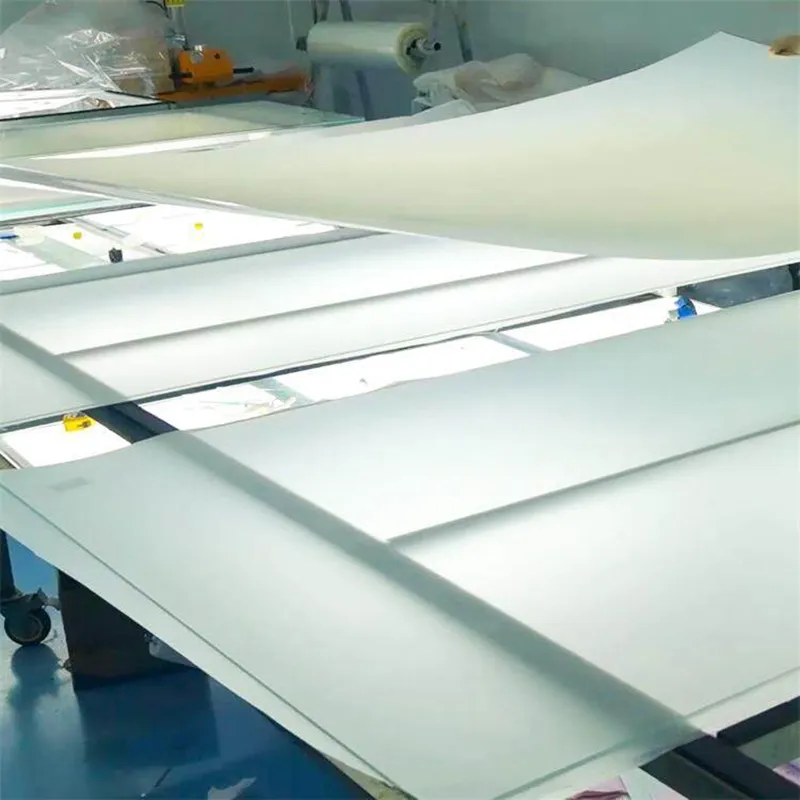
Within Grade A/B analytical laboratories, Atomized glass film is laminated directly onto the inner surface of Cleanroom weighing cover side panels and overhead glazing. When activated, it transforms the entire enclosure into a fully opaque weighing protection hood—blocking line-of-sight interference during microgram-scale dispensing, while preserving laminar airflow uniformity and minimizing turbulence-induced particle resuspension. Unlike traditional opaque polycarbonate inserts, it retains optical clarity for pre- and post-weighing verification and allows rapid decontamination using vaporized hydrogen peroxide (VHP) without film delamination. The film’s edge-sealed construction prevents moisture ingress into the interlayer, ensuring long-term stability in high-humidity environments common in biologics manufacturing. Integration requires no structural modification to existing clean room glass wall frameworks—only standard glass bonding and low-voltage wiring routed through ceiling service channels. Compatibility has been confirmed with major Clean room glass door OEMs and third-party clean room partition system integrators across Southeast Asia.
Validation & Compliance Support
Each production batch undergoes independent particulate shedding testing per ISO 14644-1 Annex B (non-viable particle emission), with results documented in the Certificate of Conformance. Film laminates are supplied with full traceability—including substrate glass origin, interlayer lot numbers, and electrical performance logs—supporting IQ/OQ documentation for regulated facilities. No outgassing of volatile organic compounds (VOCs) is detected under GC-MS analysis (detection limit: 0.1 µg/m³), confirming suitability for optical coating chambers and photolithography tool enclosures. For end users seeking turnkey infrastructure, specification guidance is available for pairing with clean room partition panels and cleanroom manufacturer partners delivering clean room full glass partition wall solutions across Malaysia and ASEAN. The film itself is not a regulatory submission item—but functions as a qualified component within validated cleanroom subsystems governed by EU GMP Annex 1, USP <797>, and ISO 14644-4 design standards.
Get a project-specific quote in 24 hours
Send your cleanroom classification, floor area and finish requirements. Our Malaysia-based engineering team replies with a stamped datasheet, fire certificate and pricing — 7×24 technical support by email, phone or WhatsApp.
Chat on WhatsApp