







Cleanroom Other Products
Anti-Static PVC Clean Booth / ESD PVC Strip Curtain Enclosure
The Anti-Static PVC Clean Booth is a flexible, cost-effective contamination control enclosure designed to create a local clean zone within general workshops or existing cleanrooms. Constructed with anti-static PVC strip curtains and a lightweight industrial frame, it provides excellent accessibility, static dissipation, and reliable particle protection for ESD-sensitive processes. This unit is ideal for applications requiring ISO Class 7–8 (Class 10,000–100,000) cleanliness with frequent personnel or material movement.
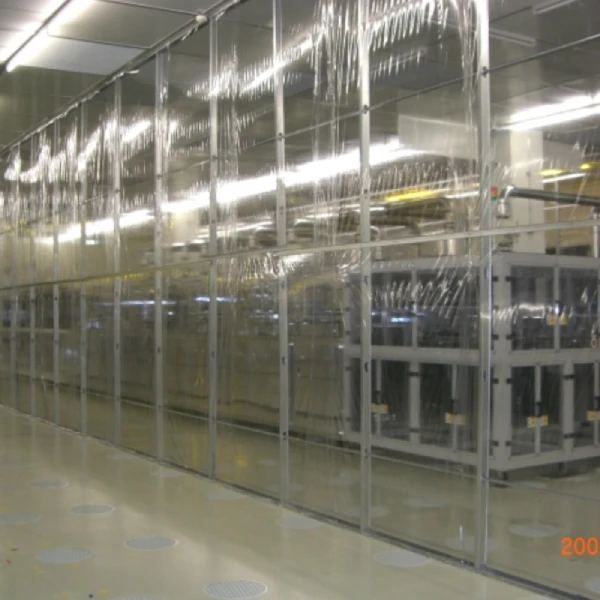
Anti-Static PVC Clean Booth / ESD PVC Strip Curtain Enclosure
For engineering teams across Malaysia’s high-precision manufacturing and regulated industries—including semiconductor & electronics fabrication, biopharma R&D and production, aerospace component assembly, precision optics calibration, food-grade packaging lines, automotive EV powertrain testing, hyperscale data center hardware staging, and next-generation battery cell manufacturing—contamination control at the workstation level is non-negotiable. This enclosure delivers localized, scalable electrostatic discharge (ESD)-safe containment without requiring full-room cleanroom build-outs. It functions as a clean room booth, bridging the gap between open-floor operations and hardwall classified environments. Unlike traditional Hardwall Modular Clean Booth systems that demand structural integration and long lead times, this solution deploys in under one day using modular PVC strip curtains engineered for continuous static dissipation. It aligns with ISO Class 5–8 ambient support zones and complements upstream infrastructure such as laminar flow hood manufacturers and downstream enclosures like Malaysia prefabricated cleanrooms.
Technical Specifications
The following table outlines verified performance parameters under standard operating conditions (23°C, 50% RH), tested per ANSI/ESD S20.20 and IEC 61340-5-1 protocols:
| Parameter | Specification |
|---|---|
| Surface Resistivity | 1 × 10⁶ – 1 × 10⁹ Ω/sq (measured per ASTM D257) |
| Static Decay Time (1000 V → 100 V) | ≤ 0.5 seconds (per ANSI/ESD STM11.31) |
| Curtain Material | Phthalate-free, UV-stabilized PVC with embedded carbon-black conductive network |
| Thickness Options | 1.5 mm, 2.0 mm, 3.0 mm (standard roll width: 150 mm) |
| Frame System | Anodized aluminum extrusion (6063-T5), corrosion-resistant, tool-free assembly |
| Max Configurable Height | 3.2 m (standard); up to 4.5 m with reinforced uprights |
| Particle Shedding (ISO 14644-1, Class 5 environment) | < 10 particles ≥ 0.5 µm/m³/hour (verified via laser particle counter) |
| Cleaning Compatibility | Compatible with IPA, 70% ethanol, hydrogen peroxide vapor (HPV) cycles; no delamination or haze |
Real-World Integration Across Critical Sectors
In semiconductor back-end test labs, this Anti-Static PVC Clean Booth isolates wafer probing stations from facility-level particulate and ionized air—reducing defect rates during final electrical validation. For biotech firms handling sterile fill-finish components or single-use bioreactor bags, the ESD PVC Strip Curtain Enclosure prevents tribocharging during manual aseptic transfers near Grade C/B buffer zones. In aerospace MRO facilities, it safeguards optical alignment of inertial measurement units (IMUs) and fiber-optic gyroscopes from both airborne contamination and static-induced micro-discharge. Automotive Tier 1 suppliers use it around battery module burn-in chambers to avoid lithium dust ignition risk while maintaining ESD-safe access. Food and beverage producers deploy it over high-speed filling heads where stainless-steel housings would impede line changeovers—meeting HACCP-compliant airflow and cleanability requirements. The system interfaces seamlessly with existing HVAC ducting, HEPA fan filter units, and integrates with clean room partition panels for hybrid softwall/hardwall configurations.
Installation in Semiconductor Wafer Test Environment
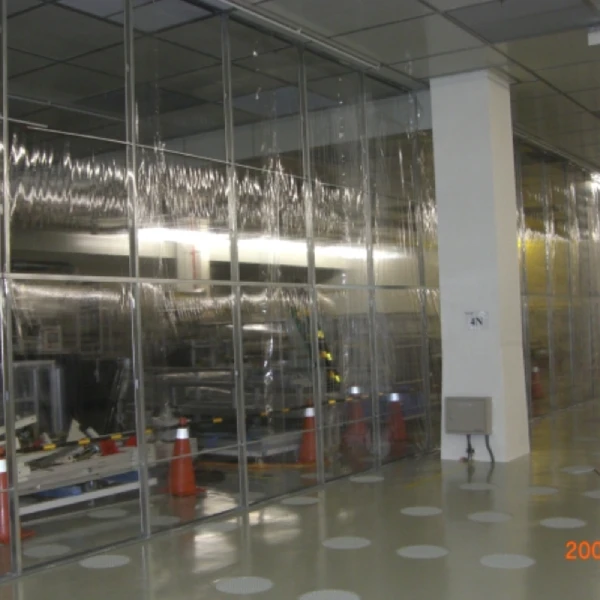
This configuration serves as a dedicated Class 7 (ISO 14644-1) work cell adjacent to an automated handler. The frame mounts directly to raised ESD flooring, and curtain overlap ensures laminar flow integrity when paired with ceiling-mounted laminar flow hood manufacturers units. Operators enter through dual-strip vestibules to minimize turbulence. Particle monitoring confirms ≤ 352,000 particles/m³ (≥0.5 µm), meeting JEDEC J-STD-033 moisture sensitivity requirements for exposed die handling. No structural modification to the host cleanroom was required—making it ideal for fast-track qualification in high-mix, low-volume production lines.
Modular Reconfiguration for Biopharma Aseptic Fill Line Support
Deployed as a Clean Panel Clean Booth extension to a Grade A isolator, this setup adds operator-accessible ESD protection for auxiliary tasks—such as vial tray loading, stopper inspection, and syringe barrel pre-assembly—without compromising the primary barrier. Integrated glove ports and a stainless-steel pass-through chamber allow material transfer while retaining static control. The system meets EU GMP Annex 1 requirements for “dynamic classification” in supporting zones and has been validated for repeated autoclave-compatible wipe-downs. Its compatibility with Malaysia prefabricated cleanrooms enables rapid replication across satellite manufacturing sites. As a flexible alternative to fixed-wall solutions, it supports evolving regulatory expectations without locking users into long-term capital commitments. Engineering teams evaluating a cleanroom manufacturer, cleanroom supplier, or cleanroom partition strategy will find this system particularly valuable where agility, repeatability, and ESD assurance converge.
Get a project-specific quote in 24 hours
Send your cleanroom classification, floor area and finish requirements. Our Malaysia-based engineering team replies with a stamped datasheet, fire certificate and pricing — 7×24 technical support by email, phone or WhatsApp.
Chat on WhatsAppWhere should air showers be installed in a cleanroom?
Install between changing rooms and clean areas, or between ISO 8/ISO 7 classified areas and unclean areas. Personnel pass through after changing into cleanroom clothing but before entering the controlled environment
What is involved in the construction of a modular cleanroom?
To assemble laboratory spaces efficiently, modular components are preferred. An assembled cleanroom utilizes prefabricated sections to reduce on-site construction time. The underlying aluminum profile system provides the necessary framework for mounting panels and doors, ensuring precision alignment and structural rigidity throughout the facility.
What are the key considerations for air shower design?
Selecting the right air shower requires careful planning. Proper air shower design ensures effective personnel decontamination before entering controlled environments. Specifications depend on room size. Consulting an experienced air shower manufacturer helps determine optimal placement. Compliance with standards is essential. Regular maintenance schedules must be established to sustain performance over time.
What defines quality in clean room door systems?
Sealing integrity is vital. air tight sliding clean room doors prevent pollutants from entering. Each air tight sliding cleanroom door must meet pressure ratings. Reputable air tight sliding cleanroom door manufacturers provide leakage certification. Automatic mechanisms reduce human contact risks. Material selection prioritizes durability and ease of cleaning to meet hygiene protocols. Installation requires precise alignment.
