






Cleanroom Other Products
Acrylic Clean Booth / Acrylic Clean Enclosure
The Acrylic Clean Booth is a modular, self-supporting contamination control enclosure designed to create a local clean zone within a general workshop or existing cleanroom. Constructed with transparent acrylic panels and an industrial-grade frame, it provides excellent visibility, easy access, and reliable particle protection for sensitive processes. This unit is ideal for applications requiring ISO Class 6–7 (Class 1,000–10,000) cleanliness without the cost of building a permanent cleanroom.
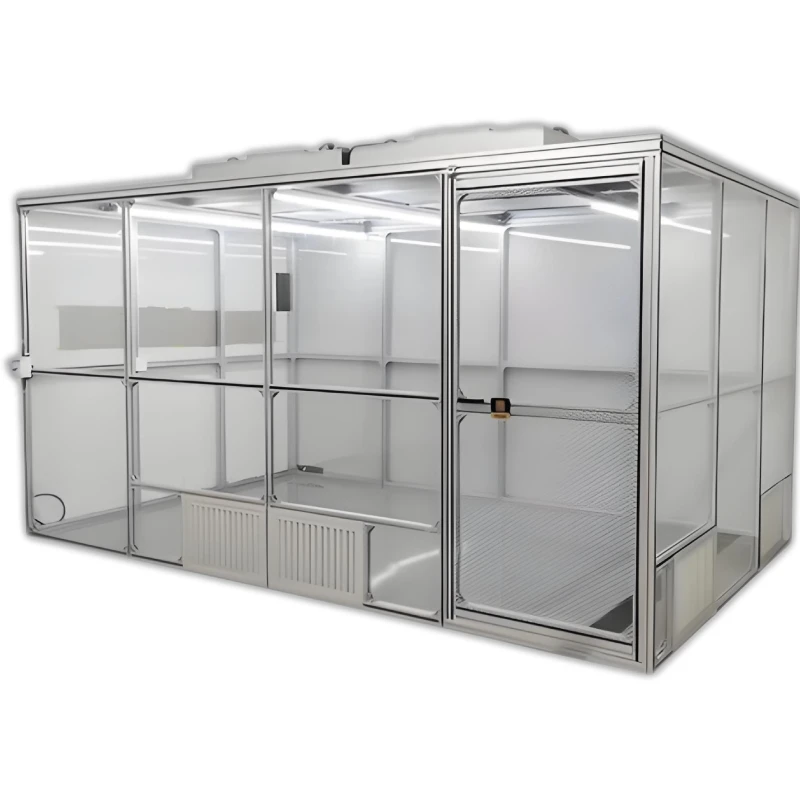
Acrylic Clean Booth and Acrylic Clean Enclosure are precision-engineered localised containment solutions designed for environments where particulate control, visual monitoring, operator ergonomics, and rapid deployment matter. Unlike full-scale cleanrooms, these enclosures deliver ISO Class 5–7 air quality at the workstation level—ideal for critical tasks requiring laminar airflow, low particle generation, and contamination isolation. Constructed from optically clear, static-dissipative acrylic panels with seamless joints and integrated HEPA-filtered laminar flow systems, they offer superior visibility, chemical resistance, and ease of cleaning. Their modular frame supports integration with existing HVAC infrastructure or standalone operation using compact blower units. As a clean room booth option, it bridges the gap between traditional laminar flow hood manufacturers and full Malaysia prefabricated cleanrooms, delivering targeted cleanliness without facility-wide retrofitting.
Key Technical Specifications
The following table outlines standard configurations for Acrylic Clean Booth and Acrylic Clean Enclosure units. All models comply with ISO 14644-1:2015 for airborne particle concentration, meet UL 61010-1 safety requirements, and support optional upgrades including VHP compatibility, touchless controls, and real-time particle counters.
| Parameter | Standard Range | Notes |
|---|---|---|
| Cleanliness Class (at work surface) | ISO Class 5 (≤3,520 particles/m³ ≥0.5 µm) to ISO Class 7 (≤352,000 particles/m³ ≥0.5 µm) | Configurable via airflow velocity (0.3–0.5 m/s) and HEPA/ULPA filter selection |
| Acrylic Panel Thickness | 10 mm (standard), 15 mm (optional) | Optical clarity >92%, surface resistivity 10⁶–10⁹ Ω/sq, anti-static coating included |
| Frame Material | Anodised aluminium 6063-T5 | Corrosion-resistant, non-shedding, compatible with cleanroom-compatible fasteners |
| Filter Type | HEPA H14 (99.995% @ 0.3 µm) or ULPA U15 (99.9995% @ 0.12 µm) | Pre-filters included; filter life monitored via differential pressure sensors |
| Power Supply | 220–240 V AC, 50/60 Hz, single-phase | Blower motor rated IP54; optional 110 V version available |
| Footprint Options | W600 × D600 × H1800 mm to W1500 × D900 × H2200 mm | Custom sizing supported; modular design enables field assembly in under 4 hours |
| Compliance & Certifications | ISO 14644-1, IEST-RP-CC001.4, CE, RoHS | Documentation includes factory-balanced airflow reports and filter certification |
Real-World Application Across Sectors
In semiconductor and electronics manufacturing, Acrylic Clean Booth units serve as wafer inspection stations and die-bonding workstations—where even sub-micron defects impact yield. Their transparency eliminates shadow interference during optical alignment, while low outgassing acrylic avoids photoresist contamination. For biomedical R&D labs, the Clean Panel Clean Booth functions as a sterile compounding zone or cell culture transfer station, supporting aseptic technique without compromising workflow visibility. In aerospace component testing, the Hardwall Modular Clean Booth isolates sensitive optical calibration setups from ambient vibration and dust—its rigid acrylic structure dampens acoustic resonance better than softwall alternatives. Precision instrument assembly lines use Acrylic Clean Enclosure units to protect micro-optics and MEMS devices during final QA, especially where solvent wiping or ionised air is required. Food and beverage facilities deploy them for microbiological sampling prep and allergen segregation—non-porous surfaces withstand frequent sanitisation with quaternary ammonium or hydrogen peroxide. Automotive Tier-1 suppliers integrate them into EV battery module testing bays for contact resistance measurement, preventing conductive dust ingress. Data centre hardware validation labs apply them for bare-board functional testing under controlled humidity and particle load. In solar cell production, they maintain stable conditions during anti-reflective coating inspection—critical for light absorption efficiency.
Integration with Cleanroom Partition Systems
Acrylic Clean Booth units are engineered for interoperability with broader cleanroom infrastructure. When deployed alongside clean room partition panels, they form hybrid zones—e.g., a Class 5 Acrylic Clean Enclosure embedded within a larger ISO Class 7 prefabricated space. The acrylic panels align precisely with standard 600 mm grid ceiling systems and accept gasketed interfaces for leak-tight transitions. Frame mounting brackets allow direct attachment to structural cleanroom partitions, eliminating gaps that compromise laminar flow integrity. This modularity supports phased cleanroom upgrades: start with a single clean room booth for high-risk processes, then expand vertically or horizontally using cleanroom supplier-provided wall and ceiling components. No structural reinforcement is needed—the unit’s self-supporting frame distributes load evenly across floor anchors. For retrofits in existing facilities, the low-profile base allows integration over raised access floors without disrupting cable management pathways.
Operational Flexibility and Lifecycle Support
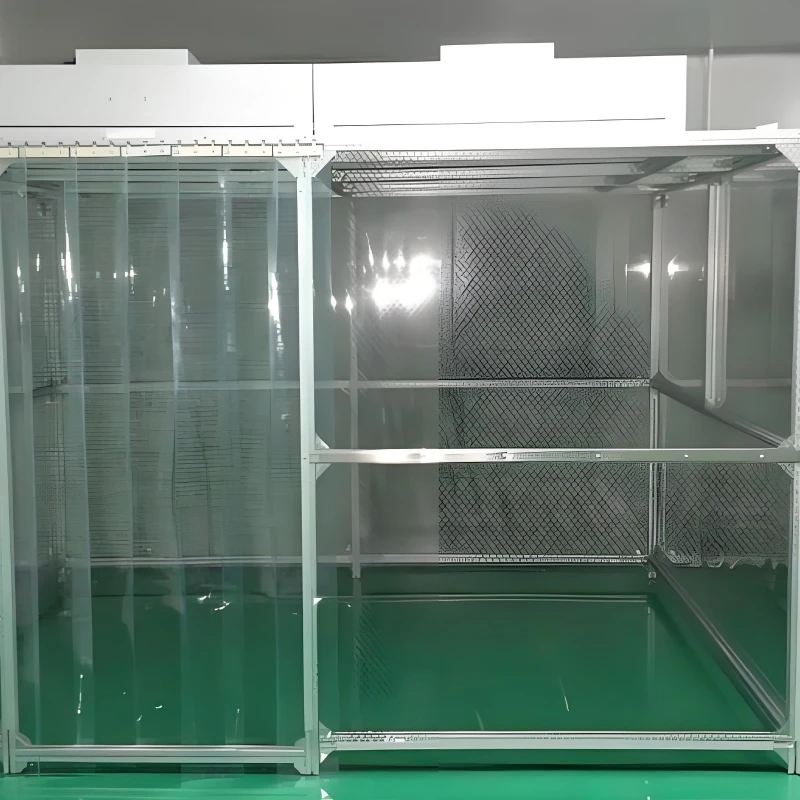
Operational longevity is built into every Acrylic Clean Booth and Acrylic Clean Enclosure. Acrylic panels are replaceable individually—no need to dismantle the entire enclosure for scratch or chemical etch damage. HEPA filters slide in from the top or rear, enabling maintenance without tools or downtime. Optional IoT-enabled controllers log airflow velocity, temperature, humidity, and filter delta-P, feeding data directly into facility SCADA or CMMS platforms. Calibration certificates are traceable to NIST standards and include on-site verification protocols upon installation. Compatibility extends beyond physical fit: electrical interfaces follow IEC 60309 colour-coding, pneumatic ports conform to ISO 8573-1 Class 2 for oil-free air, and communication ports support Modbus RTU and BACnet MS/TP. For multinational engineering teams, documentation is provided in English with bilingual (EN/MY) quick-start guides and video-based commissioning walkthroughs. Spare parts—including gaskets, fan modules, and UV-stabilised acrylic replacements—are stocked regionally to ensure sub-72-hour delivery across Malaysia. As part of a coordinated cleanroom solution, these units complement both hardwall and softwall strategies, offering a scalable path from workstation-level control to enterprise-grade environmental management—without dependency on a single cleanroom manufacturer or cleanroom supplier.
Get a project-specific quote in 24 hours
Send your cleanroom classification, floor area and finish requirements. Our Malaysia-based engineering team replies with a stamped datasheet, fire certificate and pricing — 7×24 technical support by email, phone or WhatsApp.
Chat on WhatsAppWhere should air showers be installed in a cleanroom?
Install between changing rooms and clean areas, or between ISO 8/ISO 7 classified areas and unclean areas. Personnel pass through after changing into cleanroom clothing but before entering the controlled environment
What is involved in the construction of a modular cleanroom?
To assemble laboratory spaces efficiently, modular components are preferred. An assembled cleanroom utilizes prefabricated sections to reduce on-site construction time. The underlying aluminum profile system provides the necessary framework for mounting panels and doors, ensuring precision alignment and structural rigidity throughout the facility.
What are the key considerations for air shower design?
Selecting the right air shower requires careful planning. Proper air shower design ensures effective personnel decontamination before entering controlled environments. Specifications depend on room size. Consulting an experienced air shower manufacturer helps determine optimal placement. Compliance with standards is essential. Regular maintenance schedules must be established to sustain performance over time.
What defines quality in clean room door systems?
Sealing integrity is vital. air tight sliding clean room doors prevent pollutants from entering. Each air tight sliding cleanroom door must meet pressure ratings. Reputable air tight sliding cleanroom door manufacturers provide leakage certification. Automatic mechanisms reduce human contact risks. Material selection prioritizes durability and ease of cleaning to meet hygiene protocols. Installation requires precise alignment.
